
The Insurance Producers Guild
The Insurance Producers Guild is a strategic briefing for insurance professionals, focused on Medicare, ACA, life insurance, and the evolving insurance landscape. Each episode distills complex industry changes into clear, practical intelligence.
AI was used in the making of these podcasts.
The Insurance Producers Guild
EP22 Your Part D Clients Are About to Pay More
Use Left/Right to seek, Home/End to jump to start or end. Hold shift to jump forward or backward.
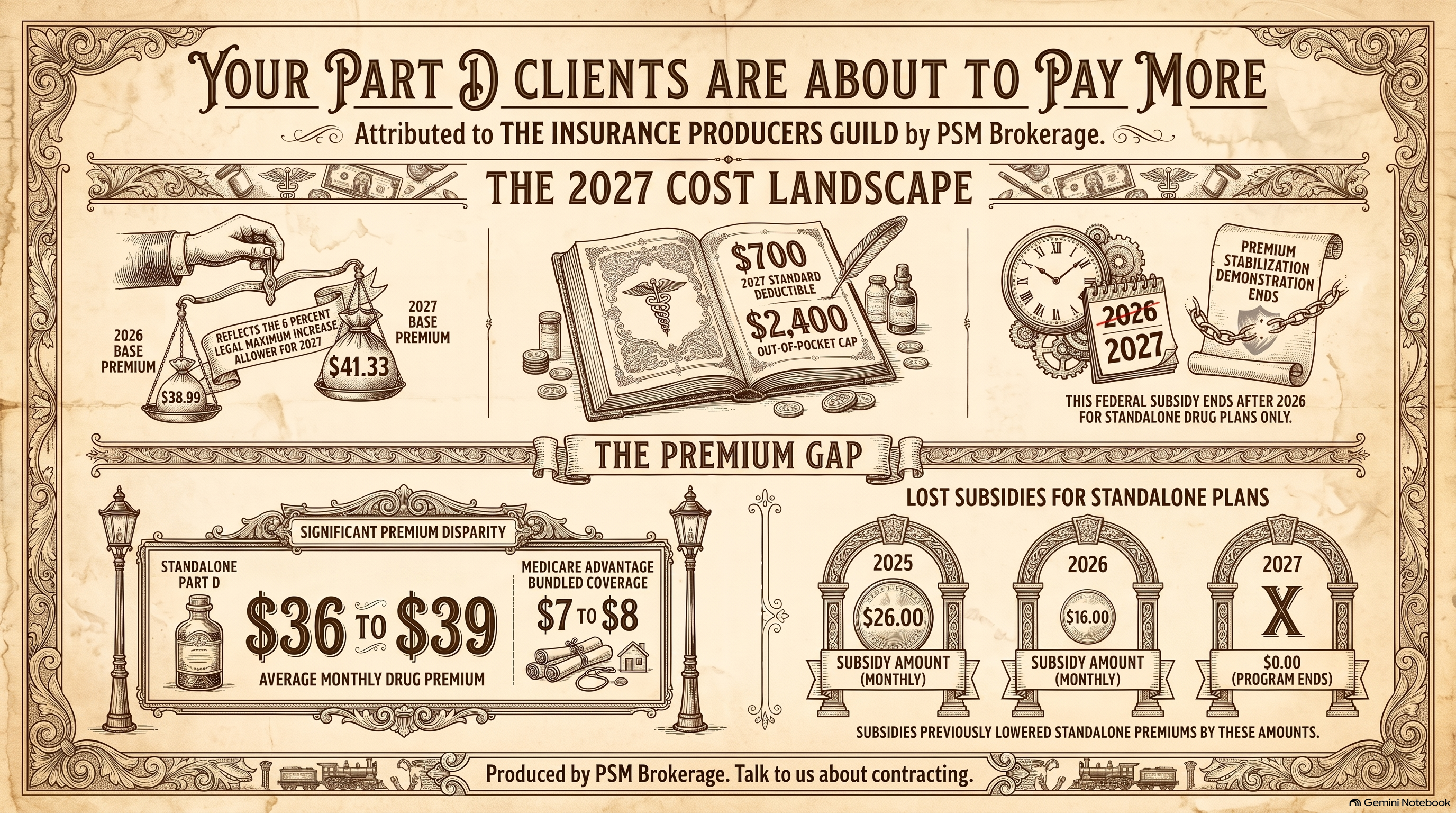
CMS set the 2027 Part D base beneficiary premium at $41.33, the maximum 6% annual increase, while ending the temporary Part D Premium Stabilization Demonstration after 2026. The standard deductible rises to $700 and the out-of-pocket cap to $2,400.
For agents, the biggest watchpoint is standalone PDP coverage. The demonstration reduced average PDP premiums, while MA-PD coverage was never included. In 2026, average monthly premiums were $36 for PDPs versus $8 for MA-PDs.
This episode explains how to turn those changes into review appointments without quoting plan-specific 2027 prices before fall landscape data and September ANOCs arrive.
🔑 Key Topics Covered
- 2027 Part D premium changes
- End of PDP stabilization
- PDP versus MA-PD premiums
- Timing plan-specific conversations
🎯 What This Means for Agents
- Prioritize standalone PDP clients for reviews
- Avoid quoting unavailable 2027 plan premiums
- Use September ANOCs to verify changes
- Book review appointments before Open Enrollment
🔗 Sources
📌 GO-DO: Book PDP Reviews
Identify every client with a standalone Part D plan and send one compliant heads-up within 48 hours asking them to book a ten-minute September review after their Annual Notice of Change arrives. Prioritize Original Medicare clients paired with a Medicare Supplement and PDP, and reserve review slots now.
Infographic: https://www.psmbrokerage.com/hubfs/The%20Insurance%20Producers%20Guild/IPG_EP22_Infographic.png
Slides: https://www.psmbrokerage.com/hubfs/The%20Insurance%20Producers%20Guild/IPG_EP22_Slides.pdf
The Insurance Producers Guild Podcast delivers intelligence for insurance agents looking to stay ahead of industry trends.
Follow the show and connect with PSM Brokerage to access tools, training, and support designed to help you grow your business.
Learn more: https://www.psmbrokerage.com
You are looking at the headline about rising 2027 Part D premiums right now. And um you are probably dreading those phone calls.
SPEAKER_01Oh, absolutely. You were just staring at your book of business, you know, worrying that you are going to look like the bearer of bad news right before open enrollment kicks off.
SPEAKER_00Yeah, but we really need to completely flip that perspective today. The agent who explains these changes first is, well, they are never the bad guy.
SPEAKER_01Right. By bringing this up now, you become the trusted expert. I mean, this news is not a reason for clients to cancel or complain.
SPEAKER_00Not at all.
SPEAKER_01It is the absolute ultimate reason for every single client to call you instead of, you know, avoiding you.
SPEAKER_00Trevor Burrus, Jr.: Yes, exactly. And uh that exact mindset shift is what agents learn through PSM brokerage's business coaching. It is all about turning industry panic into a structured sales strategy.
SPEAKER_01You do not run from the headlines, you use them.
SPEAKER_00Right. So to do that, we are bringing you a complete breakdown of the 2027 Part D landscape. Our mission today is to, well, to master the math behind these headlines so you can control the conversation with your clients.
SPEAKER_01And we are pulling data directly from the July 28, 2026 CMS release, along with some really incredible analysis from Juliette Kubansky at KFF.
SPEAKER_00Yeah, she always does great work. The core issue we're unpacking today is that the temporary premium push-in for standalone drug plans is officially ending.
SPEAKER_01Which means the training wheels are off and we have to step up. To control that conversation with your client, you um you cannot just say things are changing.
SPEAKER_00Right. You have to explain exactly what is happening and why it matters in a way that actually makes sense to them.
SPEAKER_01Exactly.
SPEAKER_00So let us start with the hard numbers from that July 28th CMS release. These are the figures setting the stage for 2027. The national average monthly bid amount is $296.05.
SPEAKER_01Okay, $296.
SPEAKER_00Yep. And the base beneficiary premium is set at $41.33. That is up from $38.99 the prior year. Wow, okay. Yeah. And if you do the math, that increase sits exactly at the 6% legal maximum allowable under the Inflation Reduction Act.
SPEAKER_01Right. They hit the ceiling.
SPEAKER_00Exactly. And on top of that, the 2027 deductible is rising to $700 and the out-of-pocket cap goes to $2,400.
SPEAKER_01Aaron Ross Powell Man. I mean, those numbers are critical, but they are really just the surface level. The real story, the thing that is going to drive your clients to pick up the phone is the end of the Part D premium stabilization demonstration.
SPEAKER_00Aaron Powell Yes. We have to explain what that program actually was because a lot of people just sort of forgot about it.
SPEAKER_01Aaron Ross Powell Right. It was a voluntary program that started back in 2025 to address the massive volatility we saw after the benefit redesign. You can kind of think of it like a giant set of shock absorbers the government installed on the Medicare market.
SPEAKER_00Aaron Powell I love that analogy, shock absorbers.
SPEAKER_01Yeah. But now CMS has decided that plant sponsors have enough experience with the redesign benefit to return to traditional market conditions for 2027. So, you know, they're removing the shock absorbers.
SPEAKER_00Aaron Powell And to really understand the impact of removing those shock absorbers, we need to look at what they were actually doing for the client's wallet.
SPEAKER_01Right.
SPEAKER_00Julia Kubansky's analysis at KFF shows us the exact mechanics of this cushion. In 2025, this demonstration reduced the base premium by $15 and capped year-over-year increases at $35.
SPEAKER_01That it's a huge chunk of change.
SPEAKER_00Oh, totally. And then moving into 2026, it was a $10 reduction and a $50 cap.
SPEAKER_01We really have to translate that into real dollars for the client, though. I mean, that subsidy artificially lowered the average monthly premium by roughly $26 in 2025 and $16 in 2026.
SPEAKER_00Aaron Powell Wait, $16 a month?
SPEAKER_01Yeah, roughly $16 a month. When you consider that the average standalone drug plan premium has been running around $36 a month, you realize the government support was covering a huge, disproportionate share of the total cost. Aaron Powell Wow.
SPEAKER_00So almost half the cost in some cases.
SPEAKER_01Aaron Ross Powell Exactly. And without those extra subsidies, that safety net is completely gone.
SPEAKER_00Aaron Powell You know, I have been doing this for over 25 years, and I have seen this exact pattern before. Whenever a temporary government support program ends, the plan mix reshuffles drastically.
SPEAKER_01Oh, for sure.
SPEAKER_00The carriers, well, they have to adjust their pricing to make up for the lost subsidies. Benefits change. And clients just get incredibly confused by their mail.
SPEAKER_01They absolutely panic.
SPEAKER_00Right. When that happens, they desperately need a guide to navigate the new landscape. And if you are not that guide, they will absolutely find someone else who is.
SPEAKER_01That is exactly how you need to view this news. I mean, the end of this subsidy is not a roadblock, it is a permission slip.
SPEAKER_00A permission slip. I like that.
SPEAKER_01Yeah, it gives you the green light to call every single drug plan client for a full review. You have a massive, undeniable, mathematically proven reason to reach out. You are not bothering them, you are saving them.
SPEAKER_00And you do not have to create the outreach materials from scratch to do this either. You can just use the PSM marketing hub to grab co-branded collateral and email templates.
SPEAKER_01That is such a time saver.
SPEAKER_00It really is. That allows you to get this warning message out to your book of business today looking polished and professional without spending 40 hours writing copy.
SPEAKER_01However, you cannot just blast an email to your entire book and hope for the best?
SPEAKER_00No, definitely not.
SPEAKER_01That is lazy selling. Blast emailing requires understanding that this premium pressure does not hit every single client the same way. The structure of their specific coverage dictates everything.
SPEAKER_00So you have to know exactly who is feeling the pain and who is shielded from it.
SPEAKER_01Exactly.
SPEAKER_00Wait, that is a crucial point. Yeah. Are you saying the end of this stabilization program does not affect the whole Medicare market equally?
SPEAKER_01Not even close.
SPEAKER_00Okay.
SPEAKER_01And that brings us to, well, probably the most important product distinction of 2027, which the KFF data spells out perfectly.
SPEAKER_00Okay, lay it out for us.
SPEAKER_01The ending subsidy only applied to standalone prescription drug plans.
SPEAKER_00Ah, okay.
SPEAKER_01Right. Those are the Part D plans sitting alongside original Medicare and Medicare supplements. You've never applied to the drug coverage bundled inside a Medicare Advantage plan.
SPEAKER_00Aaron Powell Let us slow down and explain why that matters, because this is really where the mechanics dictate the market. Why would bundled plans be immune to this specific pressure?
SPEAKER_01It comes down to how Medicare Advantage plans are funded. They can actually use medical rebate dollars to buy down the drug premium.
SPEAKER_00Right. They have those other revenue streams.
SPEAKER_01Exactly. They have revenue streams from the medical side of the house that they can legally shift over to subsidize the pharmacy side. Standalone plans just do not have that luxury.
SPEAKER_00Because a standalone Part D plan only has the pharmacy premium to work with.
SPEAKER_01Exactly. Think of it like a car dealership. A dealership can use the profits from their financing department to discount the sticker price of the actual car just to get you on the lot.
SPEAKER_00That makes total sense.
SPEAKER_01But a standalone auto parts shop has no financing department. They have to charge you the full retail price for the parts just to keep the lights on.
SPEAKER_00That is a perfect analogy, and that mechanical difference creates a massive price gap in the real world. This is why bundle drug premiums have averaged roughly $7 to $8 a month, while standalone plans have run about $36 to $39 a month.
SPEAKER_01The cap is huge.
SPEAKER_00It is. Because the standalone cushion is now gone, these two structures are moving in completely different directions. Standalone costs are facing severe upward pressure, while bundle plans have the internal mechanics and the medical rebates to keep their premiums lower.
SPEAKER_01Knowing this gives you your strategic target for this week.
SPEAKER_00Yeah.
SPEAKER_01Your very first calls are your Medicare supplement clients who have a standalone drug plan.
SPEAKER_00Okay, so target the med supp folks first.
SPEAKER_01Yes. The strategy here is simple. The Medicare supplement stays put. You do not mess with their medical coverage if it is working for them and their doctors accept it.
SPEAKER_00Right. Leave the medical alone.
SPEAKER_01But that standalone drug plan needs aggressive reshopping during open enrollment. You are calling them to save them money on the pharmacy side.
SPEAKER_00Which reinforces exactly why they trust you with the medical side in the first place. You are basically building a wall of trust around that client.
SPEAKER_01Exactly.
SPEAKER_00But how are you opening that conversation? Because a lot of agents get tongue-tied trying to explain legislative changes to an 80-year-old client.
SPEAKER_01Oh, absolutely. You need to know exactly what to say when they pick up the phone, and you really need to keep it simple. Here is a word-for-word script for a client who is worried about these premium increases. Grab a pen and write this down.
SPEAKER_00Okay, go ahead.
SPEAKER_01You say you have probably seen the headlines about Medicare drug costs changing for next year.
SPEAKER_00Nice and direct.
SPEAKER_01Right. Then you say, I am calling to let you know that the temporary government discounts on standalone drug plans are officially ending.
SPEAKER_00Wow. Okay. No sugarcoating it.
SPEAKER_01Exactly. Then you add, because you have a standalone plan with your Medicare supplement, we need to review your coverage.
SPEAKER_00Yep. Validates their specific situation.
SPEAKER_01Aaron Powell And you finish with the goal is to make sure you are not overpaying when the new prices hit. Let us get 15 minutes on the calendar right now for when your specific plan details arrive.
SPEAKER_00Aaron Powell See, I love that, but I do need to step in and push back slightly on that strategy just from a veteran perspective.
SPEAKER_01Okay, what are you thinking?
SPEAKER_00Aaron Powell The premium gap between standalone and bundled is very real, but you cannot just steer everyone into a bundled Medicare Advantage product just because of a lower monthly premium. Oh, sure. The absolute rule is to run the numbers client by client. I remember a case from a previous cycle where an agent moved a client to a bundled plan just to save 20 bucks a month on the premium.
SPEAKER_01No. Did they check the formulary?
SPEAKER_00They didn't check the formulary carefully enough. The client's specific tier three medication wasn't covered the same way. And it ended up costing the client thousands of dollars out of pocket.
SPEAKER_01Yeah, that is a nightmare.
SPEAKER_00Right. A standalone plan might have a higher premium, but it might cover a client's specific expensive formulary much better than a bundled plan. You just have to look at the total out-of-pocket cost, not just the monthly premium.
SPEAKER_01I completely agree with that. And uh I'm really glad you brought it up. The script I just gave is not about forcing a product change. It is just about booking the review.
SPEAKER_00Aaron Powell Good point.
SPEAKER_01Notice I didn't say we are moving you to Medicare Advantage.
SPEAKER_00Yeah.
SPEAKER_01I just said we need to review your coverage. The script validates their fear, explains the standalone versus bundled split in plain language, and positions you as the proactive solution.
SPEAKER_00Aaron Powell You are just securing the appointment.
SPEAKER_01Exactly. Yeah. You figure out the product fit later once you have their updated medication list and the new plan details right in front of you.
SPEAKER_00Aaron Powell Right. But now that the script is ready and the target clients are identified, we run into a massive timing problem.
SPEAKER_01Oh, the timeline. Yeah.
SPEAKER_00How do you run the numbers for a client today when the actual 2027 prices are not even public yet?
SPEAKER_01Aaron Powell You cannot, and you absolutely should not try.
SPEAKER_00Aaron Powell We really need to clarify a major misconception that traps a lot of newer agents here. We talked about that 4133 base premium and the $296 bid from CMS earlier. Right. Those are just inputs for the insurance carriers. They are part of the complex algebra carriers used to build their pricing models. They are not the actual dollar amount the client will see on their bill.
SPEAKER_01Aaron Powell Not at all.
SPEAKER_00Think of CMS providing those base numbers like a flour supplier telling a bakery what wheat costs this year. That 4133 is just the wholesale cost of the raw materials.
SPEAKER_01That's a great way to put it.
SPEAKER_00It tells the baker what their baseline is, but it does not tell the customer what the final cake on the shelf is going to cost. Trevor Burrus, Jr.
SPEAKER_01Right. The carriers take those raw materials, apply their own internal math, and then set the final retail price.
SPEAKER_00Yep.
SPEAKER_01And that internal math is what the industry calls redate reallocation. Plan sponsors had until early August to finish their rebate reallocation. That is the process where they adjust their bids based on the CMS numbers and decide how much of their medical rebates to shift over to the pharmacy side.
SPEAKER_00Okay. So when do we actually see the final retail price?
SPEAKER_01The concrete plan level premium numbers will not surface until the fall landscape release. You literally do not have the final prices yet.
SPEAKER_00Aaron Powell Which leads to my strict rule for this based on past cycles. Absolutely never quote a specific number you do not have. Do not guess. Do not estimate based on national averages. Guessing ruins your credibility the moment the actual numbers come out and you are off by $20 a month.
SPEAKER_01They will never let you live it down.
SPEAKER_00Exactly. The client won't remember that you said it was an estimate. They will only remember that you gave them the wrong price.
SPEAKER_01But you know, you do not need the final numbers to book the appointment this week. That is the exact tactical move right now. How do you mean? You do not need the price of the cake to tell them the bakery is changing its menu. You call the client today to warn them about the national trend. You tell them their specific personal financial impact will arrive in their annual notice of change letter, their ANOC, in September.
SPEAKER_00Oh, I see. You are setting the expectation early. When that ANOC letter arrives and shows a premium jump, it is not a shock.
SPEAKER_01Exactly. It is exactly what you told them would happen. You look like a prophet.
SPEAKER_00You are leveraging the ANOC to do the heavy lifting for you.
SPEAKER_01Yes. Instruct the client that the moment the NOC arrives in their mailbox, that is their cue to call you for the review you're booking right now. That is brilliant. You are taking a confusing, often terrifying piece of government mail and turning it into an appointment trigger. You're basically giving them a job to do.
SPEAKER_00Which keeps them engaged with you instead of calling a 1-800 number they saw on television.
SPEAKER_01Exactly.
SPEAKER_00As you prepare your AOC outreach strategy and start making these calls, make sure you lean on the PSM Compliance and Legal Department for Marketing Review.
SPEAKER_01Oh, absolutely essential.
SPEAKER_00They will ensure all your communications, from your emails to your social media posts, follow CMS guidelines to the letter. You want to be aggressive with your outreach, but you must remain compliant. For sure. The rules around marketing are tighter than ever, and having a dedicated compliance team review your materials before you hit send is just invaluable.
SPEAKER_01Here is the final realization you really need to walk away with today. The agents who wait for their clients to call them complaining about an NOC letter are going to lose those clients. Period. They're going to lose them to the agents who picked up the phone in August to warn them it was coming. Proactive education builds a moat around your book of business that no competitor can cross.
SPEAKER_00I love that. A moat around your business.
SPEAKER_01Yeah. If you wait for the client to experience the pain before you offer the solution, you're already too late. Get on the phones, use the script, and turn this CMS disruption into your biggest retention tool of the year.
SPEAKER_00That's this episode of the Insurance Producers Guild. If you're not already with PSM Brokerage, this is the intelligence our agents get. Talk to us about contracting.