
The Insurance Producers Guild
The Insurance Producers Guild is a strategic briefing for insurance professionals, focused on Medicare, ACA, life insurance, and the evolving insurance landscape. Each episode distills complex industry changes into clear, practical intelligence.
AI was used in the making of these podcasts.
The Insurance Producers Guild
EP23 600k Humana Members Face '27 Plan Changes
Use Left/Right to seek, Home/End to jump to start or end. Hold shift to jump forward or backward.
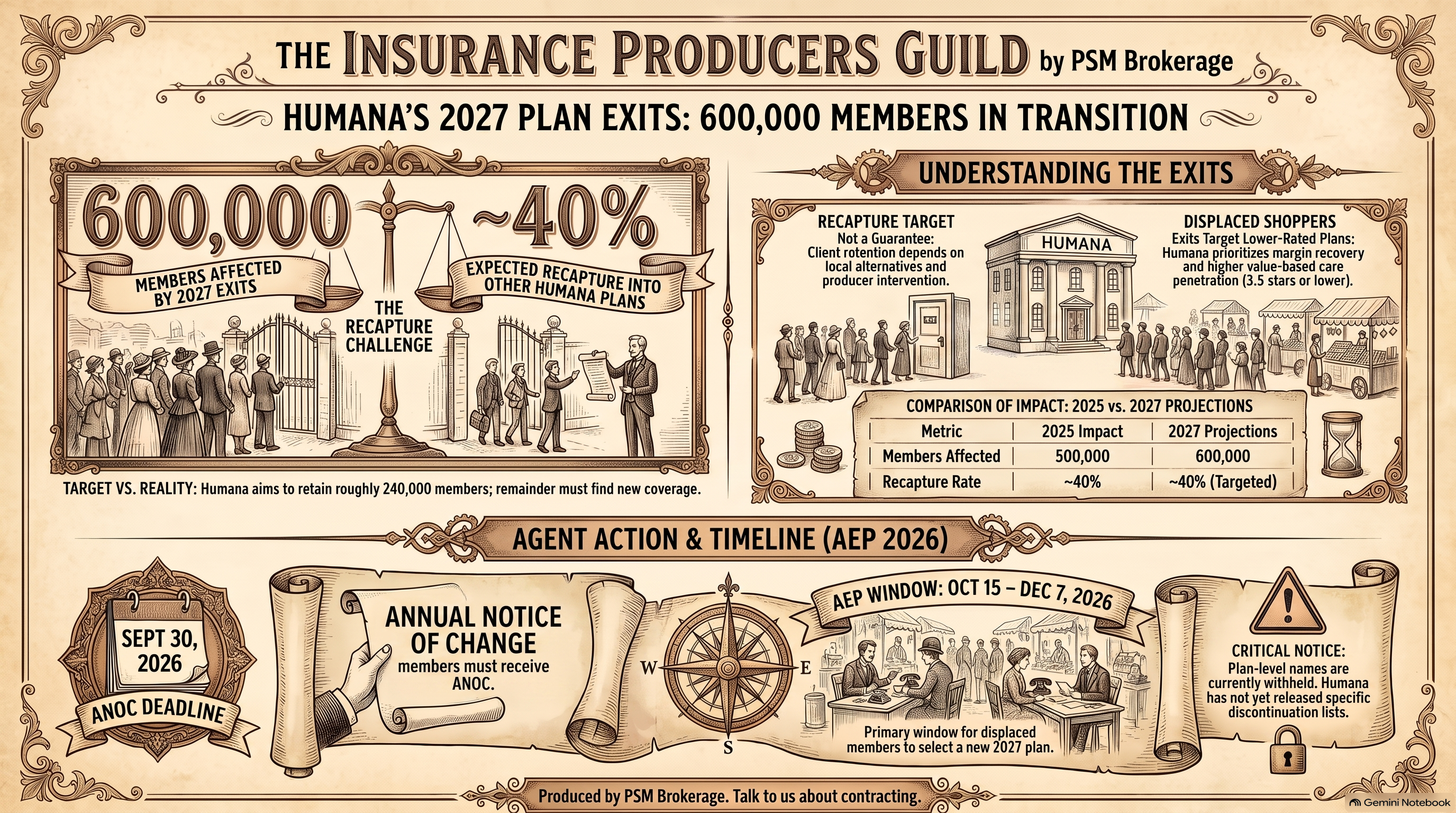
Humana said on its July 29, 2026 earnings call that 2027 Medicare Advantage plan exits will affect about 600,000 members. Humana expects to recapture just over 40 percent into other plans it continues offering, but every affected member still needs a 2027 coverage decision because their current plan is leaving.
Most exits involve plans rated 3.5 stars or lower for the 2027 bonus year. Plan-level names were not released.
In this episode we explain what agents should do now, why no 2027 plan should be quoted before it appears on the landscape, and how to schedule reviews around ANOC delivery before AEP.
🔑 Key Topics Covered
- Humana’s 600,000 affected members
- 2027 Medicare Advantage plan exits
- ANOC timing before AEP
- Rules for discussing 2027 plans
🎯 What This Means for Agents
- Identify Humana clients needing 2027 reviews
- Do not quote unavailable 2027 plans
- Prepare clients for September ANOC letters
- Schedule reviews before AEP begins
🔗 Sources
Humana Second Quarter 2026 Financial Results: https://policy.humana.com/news-and-resources/news-press/2026/humana-reports-second-quarter-2026-financial-results--affirms?utm_source=chatgpt.com
CMS 2027 Medicare Advantage and Part D Rate Announcement: https://www.cms.gov/newsroom/fact-sheets/2027-medicare-advantage-part-d-rate-announcement
📌 GO-DO: Book Your Humana 2027 Reviews
Export every Humana Medicare Advantage client this week and tag the file “2027 review.” Call each client, explain that some Humana plans are leaving for 2027, and book a 20-minute review for the week their change letter arrives. Do not quote a 2027 plan before the landscape is available.
Infographic: https://www.psmbrokerage.com/hubfs/The%20Insurance%20Producers%20Guild/IPG_EP23_Infographic.png
Slides: https://www.psmbrokerage.com/hubfs/The%20Insurance%20Producers%20Guild/IPG_EP23_Slides.pdf
The Insurance Producers Guild Podcast delivers intelligence for insurance agents looking to stay ahead of industry trends.
Follow the show and connect with PSM Brokerage to access tools, training, and support designed to help you grow your business.
Learn more: https://www.psmbrokerage.com
Picture the scenario for a second.
SPEAKER_01Okay.
SPEAKER_00The holidays are over, right? The new year has just started, and your phone rings.
SPEAKER_01Oh man. I know where this is going.
SPEAKER_00Yeah. It is one of your longest standing Medicare Advantage clients. They are standing at the pharmacy counter, or you know, maybe they're sitting in their doctor's waiting room. Right. And they are completely panicked because they've just been told their coverage does not exist anymore. Their plan simply vanished on January 1st.
SPEAKER_01It is the ultimate nightmare scenario.
SPEAKER_00It really is.
SPEAKER_01You're caught completely off guard. The client is, well, they're justifiably upset, and you look like you were asleep at the wheel.
SPEAKER_00Yeah, you look terrible.
SPEAKER_01Right. You spend years building trust with a client only to have it just evaporate in a single phone call because uh because you weren't prepared for a market shift.
SPEAKER_00Exactly. And look, the fear of that specific phone call is what keeps agents awake at night right now.
SPEAKER_01Oh, absolutely.
SPEAKER_00But we have actual data today, which means we can completely dissolve that anxiety.
SPEAKER_01We can.
SPEAKER_00The news about the 2027 plan exits is out in the open. It is a public fact now.
SPEAKER_01Yeah, it's not a rumor anymore.
SPEAKER_00Right. During their second quarter earnings call, and this was on July 29, 2026, Humana confirmed a major shift. A massive shift. So according to reports from Becker's Payer Issues and Forbes Advisor, Humana expects their 2027 Medicare Advantage plan exits to affect approximately 600,000 members.
SPEAKER_01Wow. Yes, 600,000 members is a massive footprint.
SPEAKER_00It is.
SPEAKER_01But you know, instead of panicking over the sheer size of that number, we really need to understand the mechanics behind it.
SPEAKER_00Right. Break it down.
SPEAKER_01Because this is not some random corporate retreat. This is a highly calculated margin recovery strategy. Aaron Powell Okay.
SPEAKER_00A margin recovery strategy.
SPEAKER_01The catalyst for all of this is the 2.48% average Medicare Advantage rate increase that, well, that CMS finalized back in April.
SPEAKER_00Right. I want to stop you right there though. Sure. Because throwing around a percentage, you know, like 2.48%, it can sound incredibly abstract to someone who is just out there trying to serve their clients. How does a 2.48% rate increase translate directly into 600,000 people losing their specific health plan?
SPEAKER_01Yeah. It's a good question.
SPEAKER_00Walk us through the actual, you know, the mechanical process of how that happens.
SPEAKER_01Well we have to look at the medical loss ratio.
SPEAKER_00The MLR.
SPEAKER_01Right. The MLR. By law, Medicare Advantage carriers are required to spend a specific percentage of their premium revenue on actual patient care.
SPEAKER_00Okay.
SPEAKER_01The remainder goes toward, you know, administrative costs and their profit margin. Right. So if CMS only provides a 2.48% increase in base funding, but the real world cost of health care is rising by, say, six or seven percent.
SPEAKER_00Which it is.
SPEAKER_01Exactly. Due to inflation and higher utilization, then the math completely breaks down.
SPEAKER_00Oh, we'll see.
SPEAKER_01Hospital stays cost more, prescription drugs cost more, specialist visits cost more.
SPEAKER_00Aaron Powell So basically the carrier is taking in a tiny bit of extra money from the government, but they're paying out significantly more for the care itself.
SPEAKER_01You got it.
SPEAKER_00So that margin gets entirely squeezed out.
SPEAKER_01Aaron Powell Well, the margin doesn't just get squeezed. In certain geographic areas, it vanishes completely. And carriers cannot operate at a permanent deficit. They just can't. Trevor Burrus, Jr.
SPEAKER_00Right. They're businesses.
SPEAKER_01Aaron Ross Powell Exactly. They are forced to look at their national map and identify which plans and which counties are bleeding money.
SPEAKER_00Aaron Powell So they have to make cuts.
SPEAKER_01They either have to drastically cut benefits, raise client co-pays, or exit those unprofitable counties entirely.
SPEAKER_00Aaron Powell And that's what we're seeing here.
SPEAKER_01Yeah. Humenna is choosing to exit the plans that are dragging down their overall profitability. And notably, most of these exiting plans are rated 3.5 stars or lower for the 2027 bonus year.
SPEAKER_00Oh, okay. So they are actively trimming the lower tail of profitability.
SPEAKER_01Yes.
SPEAKER_00You hear a lot about value-based care in these earnings calls. How does that factor into which counties a carrier keeps and which ones they abandon?
SPEAKER_01That is the other half of the margin equation right there.
SPEAKER_00Okay.
SPEAKER_01In a value-based care model, providers are paid based on patient health outcomes rather than just getting a fee for every single service they provide.
SPEAKER_00Right. Fee for service is the old way.
SPEAKER_01Exactly. This value-based model inherently controls costs better. It keeps patients healthier and keeps the carrier's MLR in a sustainable zone.
SPEAKER_00Okay, that makes sense.
SPEAKER_01Therefore, carriers are aggressively keeping their footprint in areas with high value-based care penetration.
SPEAKER_00And dropping the rest.
SPEAKER_01Conversely, yes, they are dropping plans in areas that rely heavily on traditional fee-for-service models where costs are just spiraling out of control.
SPEAKER_00Right. Okay. So that makes total sense from a corporate balance sheet perspective. But let's look at the human element here, you know, the actual people enrolled in these plans.
SPEAKER_01The 600,000.
SPEAKER_00Right. Humanist chief financial officer, Celeste Mellett, noted on that earnings call that the company aims to recapture a significant portion of this volume.
SPEAKER_01Yes. They did say that.
SPEAKER_00They want to mirror what they did back in 2025. Their recapture target is just over 40%. Right. So if we do the math, 40% of 600,000 members means they are hoping about 240,000 people will simply slide into other Humana plans.
SPEAKER_01That is their stated goal for the upcoming annual election period, yes.
SPEAKER_00Aaron Powell I got to challenge that framing right away though.
SPEAKER_01Okay. Why is that?
SPEAKER_00Because it can be dangerously misleading for an agent working in the field.
SPEAKER_01Oh, I see what you mean.
SPEAKER_00An agent might hear that 240,000 figure and treat it as a guaranteed safe zone for a large portion of their book.
SPEAKER_01Right, right.
SPEAKER_00But a corporate target is not a promise to a patient.
SPEAKER_01No, it is absolutely not.
SPEAKER_00It reminds me of a giant game of musical chairs.
SPEAKER_01Aaron Ross Powell Okay, I like that analogy.
SPEAKER_00The carrier owns the room, right? But they just removed 60% of the chairs. Yeah. They are projecting that 40% of the people will sit down in the remaining chairs they still own, but when the music stops, every single person in that room is scrambling.
SPEAKER_01Exactly.
SPEAKER_00No one is guaranteed a seat.
SPEAKER_01That is a much better way to visualize the reality on the ground. The recapture rate is, well, it's a financial projection designed to come for Wall Street investors.
SPEAKER_00Right. It's for the shareholders.
SPEAKER_01It is not an automatic transfer for any single enrollee on your book of business. Every single affected member, all 600,000 of them, needs a 2027 coverage decision.
SPEAKER_00Every single one.
SPEAKER_01Everyone. The leftover shopper pool is not just the 360,000 people who will not be recaptured. Everyone is in motion.
SPEAKER_00Everyone is in motion. Which means we have a massive logistical challenge ahead of us.
SPEAKER_01Huge.
SPEAKER_00Because we know the 600,000 number, but the exact county by county plan names are not public yet.
SPEAKER_01Right. And that's the sticking point for a lot of people.
SPEAKER_00I can already hear the frustration from agents asking how they were supposed to prepare when they do not even know which specific plans are on the chopping block.
SPEAKER_01Look, you do not let the lack of public plan names paralyze you.
SPEAKER_00Okay.
SPEAKER_01We have to view this in the context of the last few years. This follows a very clear multi-year retrenchment pattern.
SPEAKER_00Right. We've seen this movie before.
SPEAKER_01We really have. Think back to 2025. Humana already shed roughly 500,000 members during that cycle when they exited unprofitable plans.
SPEAKER_00Yep, I remember that.
SPEAKER_01Then for 2026, they narrowed their national footprint down to 46 states and covered 85% of U.S. counties, which was a drop from 89% the year prior.
SPEAKER_00Aaron Powell So this is year three of a sustained strategy.
SPEAKER_01Exactly.
SPEAKER_00This isn't a sudden shock to the system if you have been paying attention to the macro trends.
SPEAKER_01Right.
SPEAKER_00So since we know the event is happening, this becomes a list management problem, not a rumor problem.
SPEAKER_01Aaron Powell That's a great way to put it, a list management problem.
SPEAKER_00Aaron Powell We have to master the timeline to keep clients calm between now and October.
SPEAKER_01Yes.
SPEAKER_00So what is the regulatory clock we are working against right now?
SPEAKER_01Aaron Ross Powell Well, we need to look at the strip calendar aligned with CMS. The Integrated Care Resource Center lays this out clearly.
SPEAKER_00Okay.
SPEAKER_01The most critical date approaching is September 30, 2026.
SPEAKER_00September 30.
SPEAKER_01September 30 is the absolute regulatory deadline for all Medicare Advantage organizations to send the standardized annual notice of change to enrollees.
SPEAKER_00The ANOC letter.
SPEAKER_01The ANOC.
SPEAKER_00That is the trigger point.
SPEAKER_01Yes, it is. And this applies across the board. It includes dual eligible special needs plans or DSMPs.
SPEAKER_00Okay. Good to know.
SPEAKER_01Furthermore, plans that have Part D cost sharing must also include the low-income subsidy writer by that exact same date.
SPEAKER_00So they are all hitting mailboxes at the same time.
SPEAKER_01All of them.
SPEAKER_00Think about what happens in a senior's home when that thick envelope arrives.
SPEAKER_01Right.
SPEAKER_00It is full of confusing legalees. They read the word terminating and they immediately panic.
SPEAKER_01Oh, absolutely.
SPEAKER_00If they have not heard from you first, you have already lost control of the narrative. 100%. But here is a hard rule for the field, something every agent needs to commit to memory right now. You must not quote a 2027 plan that you cannot visibly show on the public landscape.
SPEAKER_01No, you absolutely cannot do that. The public landscape typically drops in mid to late September once the offerings are fully finalized by CMS.
SPEAKER_00Right.
SPEAKER_01Until that moment, everything is speculative.
SPEAKER_00You cannot sell what you cannot see. If the landscape has not dropped, you do not quote it. You also cannot promise the client they will land in another Humana plan because, as we established with the musical chairs analogy, we do not know who gets a seat yet.
SPEAKER_01Right. Maintaining that professional discipline is vital for compliance and honestly for client trust.
SPEAKER_00Yeah.
SPEAKER_01Frame this entirely as an opportunity to review the client's total healthcare picture.
SPEAKER_00I love that.
SPEAKER_01Their doctors might have changed over the last year, their prescriptions might have changed.
SPEAKER_00It's a holistic review.
SPEAKER_01Right. Right. This is a moment to reassess everything, not just slap a temporary fix on a terminating plan.
SPEAKER_00So true. And since we know that ANOC letter is landing in about 30 days, agents cannot wait until October to react.
SPEAKER_01No.
SPEAKER_00The annual election period opens October 15th. But if you wait until then, you are already behind the curve.
SPEAKER_01Way behind.
SPEAKER_00So let's talk about the literal first thing an agent needs to do tomorrow morning to turn this disruption into a measurable advantage.
SPEAKER_01Well, it starts with proactive communication. You need to reach out to your clients before the panic sets in.
SPEAKER_00Yes.
SPEAKER_01You want to be the calm voice of authority guiding them through the transition.
SPEAKER_00Exactly. And I'm going to give you the field-tested word-for-word script to use immediately.
SPEAKER_01Let's hear it.
SPEAKER_00When you reach out to your clients this week, this is exactly what you say. Quote, some humana plans are leaving for 2027. I do not have the county by county list yet. Your change letter is due by September 30. Let's put 20 minutes on the calendar that week so we read it together before AEP. End quote. It works. It really does.
SPEAKER_01First, you acknowledge the elephant in the room by stating some plans are leaving. You aren't hiding from the reality of the market or pretending everything is fine.
SPEAKER_00Right. You're being honest.
SPEAKER_01Second, you establish instant credibility by admitting you do not have the specific list yet.
SPEAKER_00Which is the truth.
SPEAKER_01That prevents them from demanding answers you cannot legally or factually provide right now.
SPEAKER_00Exactly. You are setting the boundaries of the conversation before they can spin out into hypotheticals about what their neighbor heard on the news.
SPEAKER_01You are containing the anxiety.
SPEAKER_00Yeah.
SPEAKER_01Then you point to the September 30 deadline, proving you understand the regulatory system better than they do.
SPEAKER_00Which builds trust.
SPEAKER_01And finally, you offer a concrete solution before the annual election period even begins. You anchor yourself as the proactive authority in their life. Yeah. You're not just a salesperson, you are their advisor.
SPEAKER_00You are the advisor. And so the immediate operational directive is clear here. Pull every single Humana Medicare Advantage client on your book today.
SPEAKER_01Today.
SPEAKER_00Go into your system and tag them as priority reviews. But, and this is a big but sending out mass communication in this highly regulated industry requires a lot of caution.
SPEAKER_01Oh, yes, it does.
SPEAKER_00You cannot just blast out a hastily typed email from your personal account.
SPEAKER_01No, compliance is non-negotiable. The CMS rules on marketing and client communication are stricter than ever.
SPEAKER_00They really are.
SPEAKER_01You want to move fast, but a compliance violation will cost you far more than a lost client. It can cost you your license.
SPEAKER_00And this is where you lean on your verified operational tools. You need to utilize the PSM marketing hub.
SPEAKER_01That's a huge resource. It is.
SPEAKER_00They provide co-branded review letters specifically designed for these types of market events. Right. So you generate a professional, authoritative letter to send to that tag list. But before a single letter goes in the mail or a single email hits an inbox, you must send that draft to the PSM Compliance and Legal Department.
SPEAKER_01Yes. They will review and clear the marketing language so you are totally protected.
SPEAKER_00You have to protect yourself.
SPEAKER_01Speed is important, but accuracy is what keeps your business running long term.
SPEAKER_00Build the collateral in the PSM marketing hub, get it cleared by the compliance and legal department, and deploy it.
SPEAKER_01That's the workflow.
SPEAKER_00Once the communication strategy is locked in, we have to look at the broader logistical hurdle. If Humana hits their 40% recapture target, that leaves roughly 360,000 members nationwide who will definitely need a completely different carrier or a return to original Medicare.
SPEAKER_01That is a massive influx of shoppers entering the market simultaneously.
SPEAKER_00Massive.
SPEAKER_01Your portfolio has to be robust enough to handle them. If you only have one or two carrier contracts in a specific county, and those happen to be the ones exiting or reducing benefits, well, you have nowhere to move your clients.
SPEAKER_00And what happens then?
SPEAKER_01They will find another agent who has the right products.
SPEAKER_00Which means agents must lean on PSM contracting support today.
SPEAKER_01Right now.
SPEAKER_00Do not wait until October 10 to realize you are missing a key regional carrier. Make sure all of your 2027 appointments are active, certified, and ready to go well before AEP opens.
SPEAKER_01Exactly.
SPEAKER_00You cannot solve a client's problem in November if you do not have the right carrier contracts in place in August.
SPEAKER_01No, we can't.
SPEAKER_00And for agents who are looking to actively grow their book during this chaos, leaning on PSM lead vendor partnerships or PSM business coaching can help you scale your outreach to capture those displaced shoppers.
SPEAKER_01Absolutely. And you know, this Humana exit is a massive event on its own, but we really have to pull back and look at the macro environment. Humana is not operating in a vacuum.
SPEAKER_00Wait, this is the most critical piece of the puzzle that I think a lot of people are overlooking right now.
SPEAKER_01Yeah.
SPEAKER_00If Humana is cutting 600,000 members just to survive a 2.48% rate increase, what does that mean for the rest of the market? Every single carrier is looking at that exact same CMS rate.
SPEAKER_01Exactly. Every competing carrier is evaluating their own medical loss ratios, their own administrative costs, and their own profitability under those same tight rate conditions.
SPEAKER_00So they're all feeling the squeeze.
SPEAKER_01Yes. The disruption is going to ripple across the entire industry. Other carriers will inevitably adjust their own footprints, tweak their benefits, or exit unprofitable counties.
SPEAKER_00So this is not just a Humana event. The Humana news is just the first domino to fall.
SPEAKER_01It is the catalyst. This creates a massive industry-wide review opportunity for an agent's entire book of business. The strategy we just outlined does not just apply to your Humana clients. Right. Every single client needs a comprehensive review because the ground is shifting underneath all of them.
SPEAKER_00That changes the entire scope of AEP. You use the Humana news as the spearhead to open conversations, but you apply that proactive review strategy across your entire book. You protect the clients you have, and you position yourself to catch the clients who are left behind by unprepared agents. That's this episode of the Insurance Producers Guild. Stay tuned for the next one. If you're not already with PSM brokerage, this is the intelligence our agents get. Talk to us about contracting.